
Behind the levee
Hydroseeding in Millington, TN
Low ground north of Memphis with a long history of high water.
- We walk every site before quoting, and the quote comes in writing
- Grass picked for how much sun, shade and season your yard actually gets
- A watering plan left with every new lawn
Lawn Recovery in a City That Knows Floods
Hydroseeding in Millington often follows high water. The city sits at about 260 feet, lower than most of Shelby County. A flood in late December 1987 killed three people and displaced over 6,000 residents, which led to the current levee system. On May 1 and 2, 2010, a nearby levee broke during roughly 10 inches of rain in two days, and about 1,500 people were evacuated. When lawns sit under water like that, the grass usually dies and silt is left behind.
Rebuilding a flooded yard
After a flood we scrape off heavy silt deposits, check whether the grade still drains away from the house, add topsoil where it washed out and hydroseed the whole area. Floodwater often leaves the ground compacted and short of oxygen, so we loosen the surface before seeding.
Near the levee and drainage ways
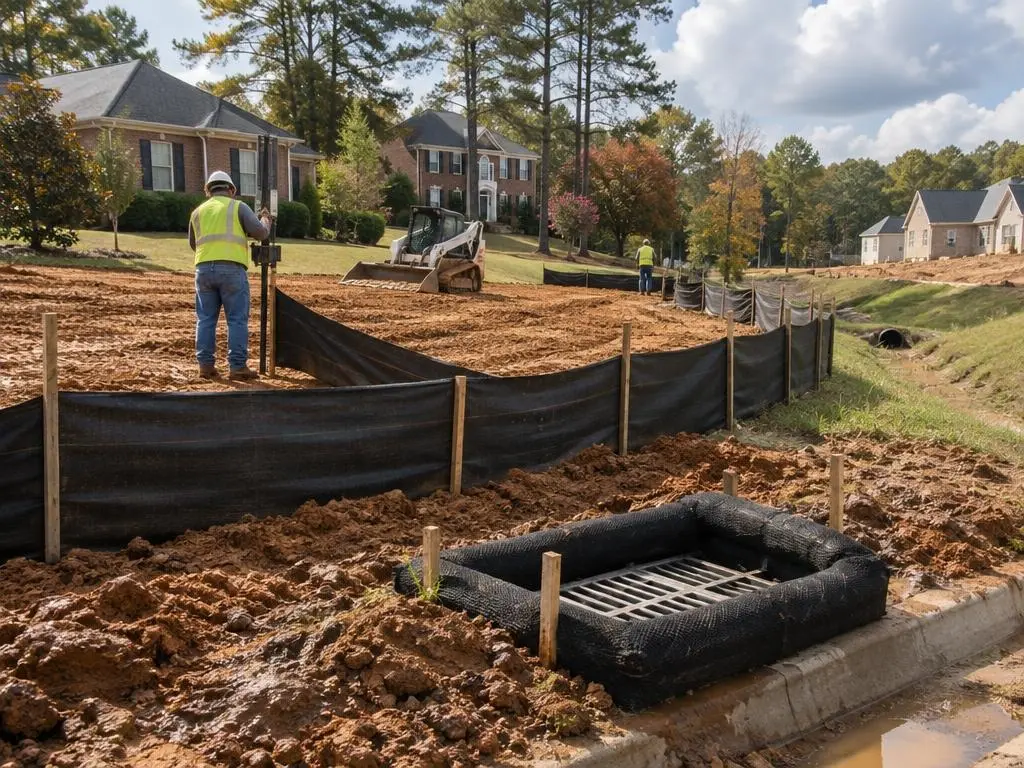
Yards that back up to levees, ditches and drainage channels need cover that will not wash off with the next storm. Straw blankets or bonded fiber matrix on banks, and silt fence along low edges, help the new grass get established without losing soil into the drainage system.
Land with a past as model farms
Millington's naval base started as Park Field in 1917. In 1937 the Resettlement Administration took over the land and built model farms to show what correctly managed land could do. That idea of farming the soil carefully still fits lawn work: good soil prep beats extra seed every time.
Base, parks and golf
Naval Support Activity Mid-South covers 1,950 acres, and the city has golf courses and parks like the 22-acre Aycock Park. Big, open turf areas like these benefit from hydroseeding because it covers large areas quickly and evenly.
Cleaning up after high water or regrading a low yard? Get a free estimate or call (901) 295-6462.
Millington Flood and Land History
- 1987 flood. A flood beginning December 25, 1987 killed three people and displaced over 6,000 residents, leading to the current levee system.
- 2010 levee break. On May 1 and 2, 2010, a levee broke after about 10 inches of rain in two days; about 1,500 people were evacuated.
- Model farms. In 1937 the Resettlement Administration developed model farms on the Park Field land to demonstrate correct land management.
- Low elevation. Millington sits at about 260 feet, about 9 miles north of Memphis and close to the Mississippi River.
Millington Questions
Our yard flooded and the grass died. Can we just reseed?
Usually not without prep. Silt crusts and compacted soil need to be broken up or removed first, and the grade checked so water drains away.
Do you seed levee-side or ditch-side banks?
Yes, with erosion control blankets or a heavy hydromulch so the seed is not washed out by the next storm.
How soon after a flood should we seed?
Once the ground has dried enough to work without rutting. Seeding into soggy, compacted soil wastes seed.
Do you seed large areas like fields or sports grounds?
Yes. For large open turf like fields and sports grounds, hydroseeding covers the ground evenly and quickly.
Hydroseeding Near Millington
- Hydroseeding in Memphis, TN
- Hydroseeding in Germantown, TN
- Hydroseeding in Collierville, TN
- Hydroseeding in Bartlett, TN
- Hydroseeding in Cordova, TN
- Hydroseeding in Arlington, TN
- Hydroseeding in Lakeland, TN
- Hydroseeding in Atoka, TN
- Hydroseeding in Oakland, TN
- Hydroseeding in Southaven, MS
- Hydroseeding in Olive Branch, MS
- Hydroseeding in Horn Lake, MS
- Hydroseeding in Hernando, MS
- Hydroseeding in West Memphis, AR
- Hydroseeding in Marion, AR
- Hydroseeding in Covington, TN
- Hydroseeding in Eads, TN
- Hydroseeding in Piperton, TN
- Hydroseeding in Somerville, TN