
Holding loess in place
Bank & Slope Erosion Control in Memphis, TN
Blankets, hydromulch and seed for the banks and ditches that wash out every spring.
- We walk every site before quoting, and the quote comes in writing
- Grass picked for how much sun, shade and season your yard actually gets
- A watering plan left with every new lawn
Silt That Leaves With Every Storm
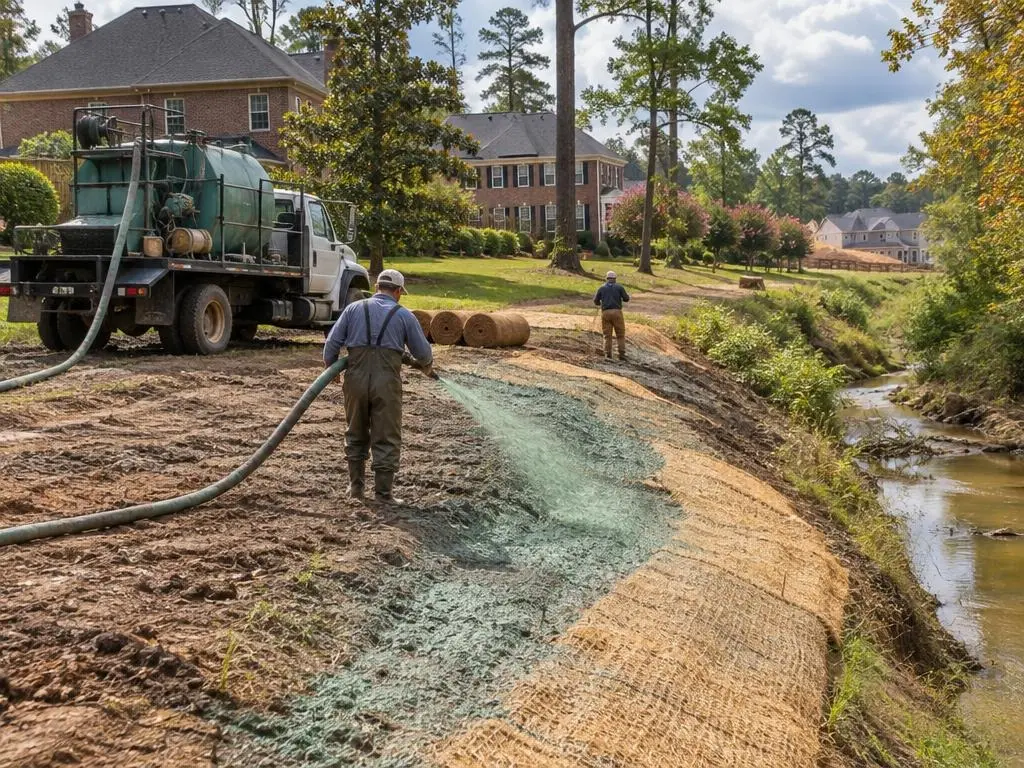
Bank and slope erosion control in Memphis starts with understanding the soil. The bluffs and uplands around the city are built from loess, wind-blown silt that can be up to 70 feet thick along the river and that geologists describe as slide-prone. The ground is cut by very steep little valleys and higher-gradient streams than the land on either side. Strip the cover off one of those banks and the silt goes downhill in the first hard rain. We stabilize slopes, swales, drainage ditches and creek-side yards with a mix of erosion control blankets, hydromulch and seed, chosen for how steep the ground is and how much water crosses it.
Signs your slope needs help
- Fresh rills or small gullies after each rain
- Muddy fans of silt at the bottom of the bank or across the sidewalk
- Grass that will not take on a slope no matter how often it is seeded
- A swale or ditch that gets deeper and wider every year
- Exposed roots or fence posts along the top of a ravine
- Water that cuts across the yard instead of following the swale
Hydromulch, bonded fiber matrix or blankets
On gentle slopes, a standard hydroseed application with a heavier rate of wood fiber mulch is often enough. As slopes get steeper or longer, we move to a heavier hydro mulching layer or a bonded fiber matrix, which is a mulch with a stronger binder that forms a continuous, absorbent crust and holds better under rain. Where water is concentrated, such as in a swale, along a ditch line or at the bottom of a long slope, sprayed products are not enough on their own, and we install erosion control blankets: mats of straw, a straw and coconut blend, or coir, pinned to the soil with staples over the seed. Straw blankets break down in a season or so; coir lasts longer and suits channels and steeper banks.
Why rain timing matters here
Memphis averages almost 55 inches of precipitation a year, and spring brings the most severe thunderstorms, with heavy downpours, hail and strong winds. Rain also returns in late fall, with precipitation peaking again in November and December. A slope seeded in late summer has to survive those fall rains before the grass is thick, and a slope seeded in spring has to survive the storm season right away. That is why we decide on the protection layer first and the seed second. A blanket or bonded mulch protects the surface whether or not the grass has come up yet.
Seed for slopes
Bermudagrass roots aggressively and spreads by runners, which makes it a strong choice for sunny banks sown in late spring. On shaded ravine slopes under trees, tall fescue sown in the late August to mid-October window does better. On ditches and drainage channels that will not be mowed often, we may use a mix with a fast-starting annual grass to protect the soil while the permanent grass establishes. Where a homeowner wants a lower-maintenance bank, we can discuss native grass seeding as long as the site gets enough sun.
Slope stabilization limits
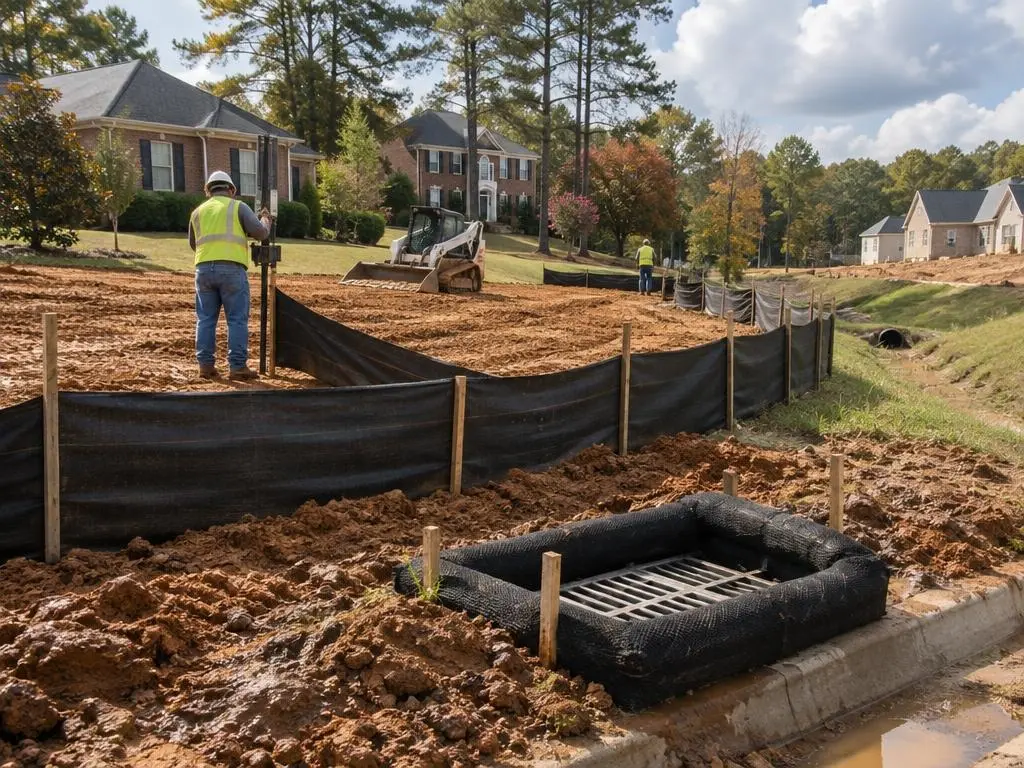
Seed, mulch and blankets control surface erosion: the rain splash, sheet flow and rills that strip a few inches of soil at a time. They do not fix a slope that is sliding or slumping because of deeper movement or water seeping out of the bank. If we see cracks at the top of a slope, a bulge at the toe, leaning trees or wet seeps, we tell you that the bank needs a geotechnical engineer or a retaining structure first, and we come back to seed once that is done. Being clear about this saves you money.
Swales, ditches and creek edges
Many yards in Shelby County and DeSoto County drain through a shallow swale along the property line or a roadside ditch. When those wash, the fix is often a combination of reshaping the channel so water spreads instead of cutting, a coir or straw-coir blanket along the flow line, and seed and mulch on the side slopes. Along creek banks, check with the city or county before doing work near the water, since some stream buffers have their own rules.
After installation
Blanketed and mulched slopes still need water to germinate the seed, and they need to be kept off-limits to mowers and foot traffic until the grass is established. Check after the first few big storms for any spots where water got under the blanket or the mulch thinned, and call us to patch them before they grow. A well-covered slope usually looks the roughest during its first month and improves quickly from there.
Downspouts and outlets
A lot of yard erosion starts at a pipe. Downspout extensions, sump discharge lines and driveway culverts dump concentrated water onto bare silt, and the gully grows from there. Spreading that water with a splash pad, a rock apron or a buried line to a safer outlet often matters as much as the seed.
If a bank on your property is washing, get a free estimate or call (901) 295-6462.
Erosion Control Options
The right layer depends on slope, flow and shade.
Heavy-rate hydromulch
Extra wood fiber mulch and tackifier for gentle to moderate slopes.
Bonded fiber matrix
Sprayed mulch with a strong binder for steeper slopes where blankets are hard to install.
Straw erosion control blankets
Biodegradable straw mats stapled over seed on banks and short slopes.
Straw-coir and coir blankets
Longer-lasting mats for swales, ditch lines and higher-flow areas.
Swale and ditch reshaping
Regrading channels so water spreads instead of cutting, before blanketing.
Slope seeding
Sun or shade grass mixes and quick-cover nurse grass for banks and ravines.
Published Erosion Control Unit Prices
| Item | Published price |
|---|---|
| Sprayed wood-fiber mulch, each 1,000 sq ft (2025 DOT contract unit prices) | $98 |
| 70/30 straw-coconut blanket, laid and stapled, each 1,000 sq ft (same list) | $468 |
| Coir blanket, laid and stapled, each 1,000 sq ft (same list) | $532 |
| Hand-spread straw mulch, per 1,000 sq ft (same DOT list) | $170 |
| Steep-slope hydroseeding add-on, per sq ft (HomeGuide, 2025) | $0.05 to $0.10 |
| Bonded fiber matrix | No current published figure found; quoted once we see the slope |
Published ranges come from national cost guides and rate schedules, not from Memphis jobs. Lot size, slope, truck access, soil prep and the time of year all move the number. Use these to compare. Our written bid is the only price that applies.
How We Stabilize a Slope
1. Walk the slope
We look at steepness, length, where water comes from and any signs of deeper movement.
2. Pick the layer
Hydromulch, bonded fiber matrix or blankets, written into the estimate with the reason.
3. Prep the surface
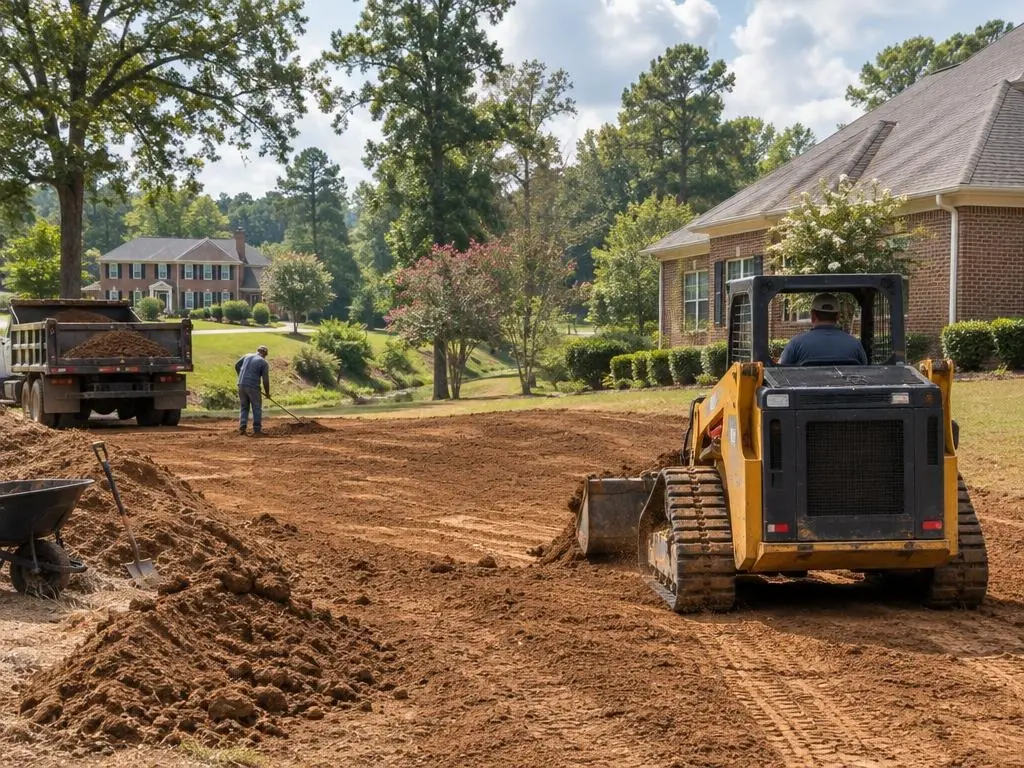
Rills filled, loose material raked, channels reshaped where needed.
4. Seed and cover
Seed applied, then the mulch sprayed or the blankets rolled and stapled.
5. Storm check
After the first big rains, we patch any spot where water got under the cover.
Why Choose Us for Bank & Slope Erosion Control
Straight talk on slides
If a slope is moving, we tell you it needs an engineer before seed.
Layer chosen for the water
Concentrated flow gets blankets, not just spray.
Shade and sun mixes
Ravine slopes under trees get a seed that can grow there.
Bank & Slope Erosion Control Questions
What is the difference between hydromulch and an erosion control blanket?
Hydromulch is sprayed with the seed and forms a mat that protects the surface on gentle to moderate slopes. A blanket is a stapled mat of straw or coir that holds up better on steeper slopes and where water flows across the surface.
Will grass alone stop my bank from eroding?
Once it is thick, grass does a lot. The problem is the first months, before it fills in. A blanket or heavy mulch protects the soil until then.
Can you fix a slope that is sliding?
Not with seed alone. Cracks, bulges, leaning trees or seeps mean deeper movement, which needs an engineer or a retaining structure. We can seed and stabilize the surface after that work.
How long do straw blankets last?
Straw blankets are designed to break down after the grass has grown through them, usually within a season or so. Coir lasts longer and is used in channels and on steeper ground.
Is native grass a good option for a steep bank?
It can be on sunny banks you do not want to mow. Native grasses establish more slowly, so the bank still needs a blanket or heavy mulch for protection while they come in.
Bank & Slope Erosion Control Service Areas
- Hydroseeding in Memphis, TN
- Hydroseeding in Germantown, TN
- Hydroseeding in Collierville, TN
- Hydroseeding in Bartlett, TN
- Hydroseeding in Cordova, TN
- Hydroseeding in Arlington, TN
- Hydroseeding in Lakeland, TN
- Hydroseeding in Millington, TN
- Hydroseeding in Atoka, TN
- Hydroseeding in Oakland, TN
- Hydroseeding in Southaven, MS
- Hydroseeding in Olive Branch, MS
- Hydroseeding in Horn Lake, MS
- Hydroseeding in Hernando, MS
- Hydroseeding in West Memphis, AR
- Hydroseeding in Marion, AR
- Hydroseeding in Covington, TN
- Hydroseeding in Eads, TN
- Hydroseeding in Piperton, TN
- Hydroseeding in Somerville, TN
Get a Bank & Slope Erosion Control Estimate
Free slope and ditch assessments with a written erosion control estimate.