
The Wonder City of the Delta
Hydroseeding in West Memphis, AR
Flat river-bottom ground cleared from forest and swamp a century ago.
- We walk every site before quoting, and the quote comes in writing
- Grass picked for how much sun, shade and season your yard actually gets
- A watering plan left with every new lawn
Lawns on Low, Flat Delta Ground
Hydroseeding in West Memphis means working with flat, low Delta land. The city sits at about 213 feet, more than 100 feet below downtown Memphis across the river. Before the St. Francis Levee District was formed in 1893, the whole area usually flooded in spring, and the main levee broke in 1912 and 1913. The 1913 flood was the last time the levee broke in Crittenden County. Today the levees hold the river back, but the ground is still flat and slow to drain.
Drainage before seed
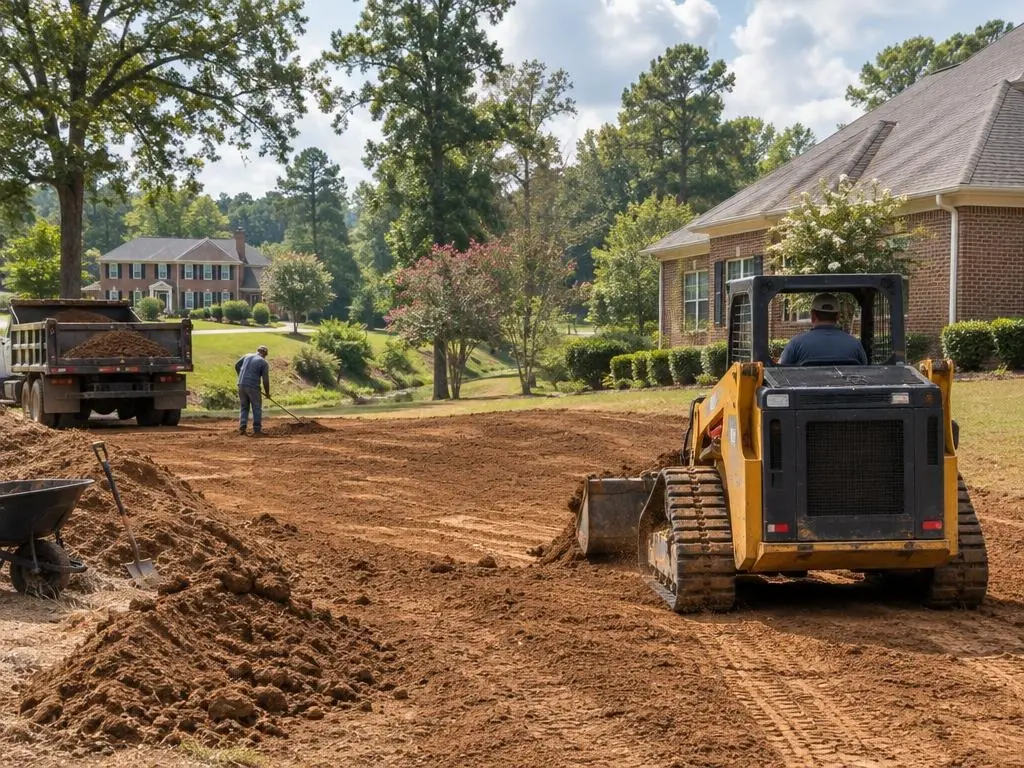
On flat lots, a tiny change in grade decides whether rain runs off or sits on the lawn. Before seeding we set the grade so runoff heads off from the foundation out to the curb or a ditch, fill low spots and loosen compacted soil. Seed sown into puddle-prone ground rarely does well.
Built from forest and swamp
West Memphis grew from thick forests and swamps in the early 20th century. In 1914 lumberman Zack T. Bragg bought 300 acres of virgin timber and set up a sawmill, and clearing that timber gave way to fertile farmland and eventually the city. The area's settlers were drawn by fertile river bottom soil. That soil can grow excellent turf once it is drained and loosened.
Commercial and industrial ground
River, rail and highway access made West Memphis a manufacturing and distribution hub. Industrial and truck-yard projects strip large areas that need silt fence during construction and fast commercial hydroseeding after grading.
Typical West Memphis jobs
- Grading and topsoil to fix low, wet yards
- New lawn hydroseeding
- Ditch bank erosion control
- Commercial and construction hydroseeding
Have a yard that stays wet for days after rain? Get a free estimate or call (901) 295-6462.
West Memphis Land History
- Levee district. The area usually flooded each spring until the St. Francis Levee District was established in 1893.
- Last levee break. The St. Francis main levee broke in 1912 and 1913; the 1913 flood was the last levee break in Crittenden County.
- Cleared forest. Zack T. Bragg bought 300 acres of virgin timber in 1914; clearing it gave way to fertile farmland and the future city.
- Low elevation. West Memphis sits at about 213 feet, directly across the Mississippi River from Memphis.
West Memphis Questions
Do you work in Arkansas?
Yes. West Memphis and Marion are part of our service area across the river.
My West Memphis yard is completely flat. Can you still make it drain?
Usually, yes. A gentle grade away from the house and filled low spots go a long way. Severe cases may need a drain line, and our crew can handle the trenching.
Is the soil here good for a lawn?
River bottom soil can grow excellent turf once it drains well and is not compacted.
Can you seed a truck yard or industrial site?
Yes. We seed open areas, banks and ditches around commercial and industrial sites.
Hydroseeding Near West Memphis
- Hydroseeding in Memphis, TN
- Hydroseeding in Germantown, TN
- Hydroseeding in Collierville, TN
- Hydroseeding in Bartlett, TN
- Hydroseeding in Cordova, TN
- Hydroseeding in Arlington, TN
- Hydroseeding in Lakeland, TN
- Hydroseeding in Millington, TN
- Hydroseeding in Atoka, TN
- Hydroseeding in Oakland, TN
- Hydroseeding in Southaven, MS
- Hydroseeding in Olive Branch, MS
- Hydroseeding in Horn Lake, MS
- Hydroseeding in Hernando, MS
- Hydroseeding in Marion, AR
- Hydroseeding in Covington, TN
- Hydroseeding in Eads, TN
- Hydroseeding in Piperton, TN
- Hydroseeding in Somerville, TN